
Choosing to teach your child at home in Florida can be a powerful decision—especially when you’re protecting confidence, reducing daily stress, or rebuilding a student’s love of learning.
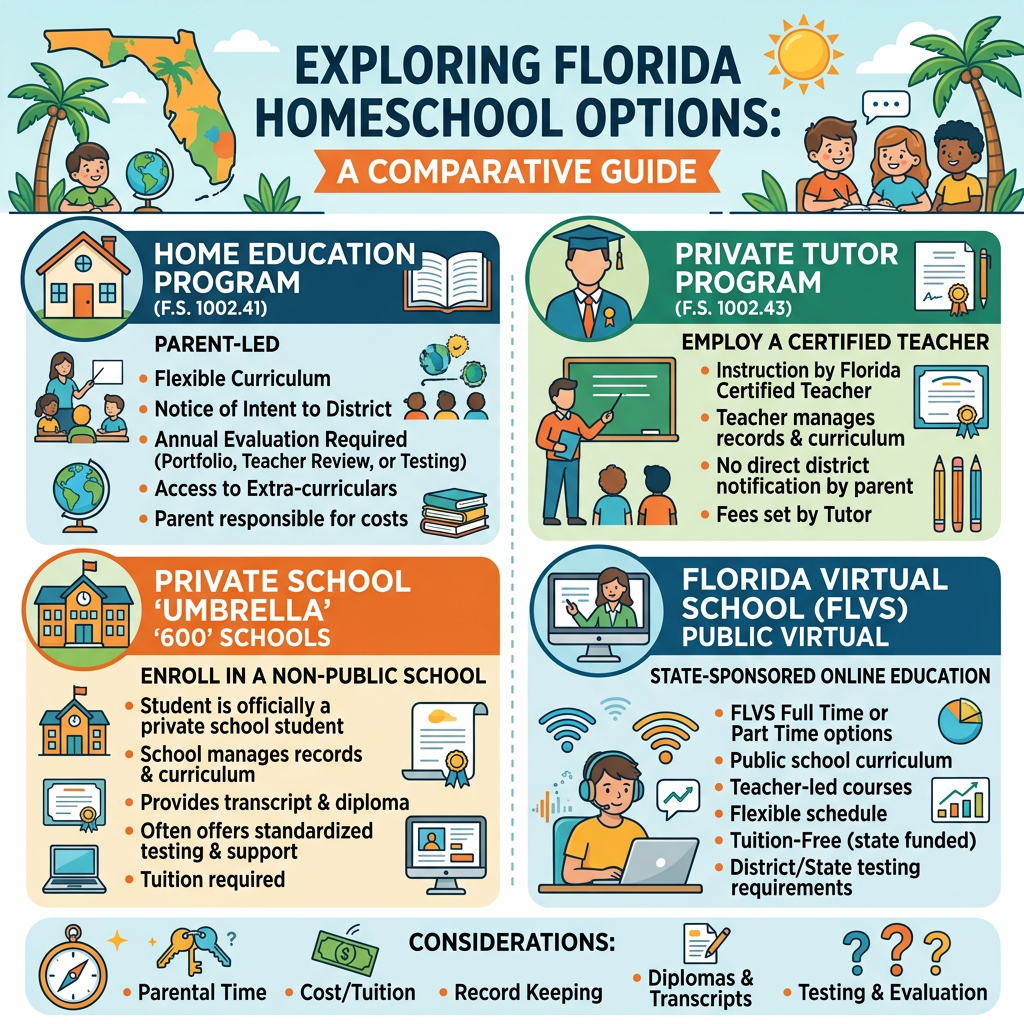
But “homeschooling” in Florida can mean a few different things. Families often hear terms like home education program, umbrella school, private school, and FLVS and end up unsure what’s actually required—or which path delivers the best learning experience.
This guide breaks down the three most common routes Florida families use:
- the Florida Home Education Program (parent-directed homeschooling)
- umbrella/private school options (home-based education under a private school structure)
- Florida Virtual School (FLVS) (online public school courses)
We’ll keep this practical, not political—and focused on quality for K–12 learners.
A quick note from our team (and why we care)
At Alternative Educational Services, our staff brings 100+ combined years serving At‑Promise students—students who are at promise of success, not “at risk of failure.” Families choose home learning for many reasons, and we respect them.
Our goal with this resource hub is simple: help you build a high-quality education at home that’s every bit as intentional as what great brick-and-mortar schools provide.
Option 1: Florida Home Education Program (parent-directed homeschooling)
Best for: families who want maximum flexibility and direct control.
In this option, the parent is essentially building the educational program. You select curriculum, set the pace, and choose learning experiences that fit your child.
What parents like:
- flexible scheduling (work, travel, medical needs, sports)
- customization for learning differences or anxiety
- the ability to slow down or accelerate without stigma
What to plan for:
- keeping records/portfolio and staying organized
- choosing an annual evaluation/testing approach
- building consistent routine (the #1 quality lever for most families)
Quality tip: many families underestimate writing and math practice over time. A simple weekly structure prevents “quiet gaps” from growing.
Option 2: Umbrella / Private School-at-Home
Best for: families who want homeschooling with more structure, reporting support, or a private-school framework.
In umbrella/private school structures, you’re often educating at home but under the umbrella of a private school. This can bring:
- clearer documentation systems
- support with transcripts or course documentation (especially in high school)
- a school-like framework without a daily campus schedule
What parents like:
- “someone has done this before” support
- clearer expectations and systems
- easier structure for families new to home education
What to plan for:
- costs/tuition or service fees
- policies vary by program (curriculum requirements, reporting, grading)
Quality tip: ask any program you’re considering:
“What does high-quality learning look like here in reading, writing, and math across K–12?”
Option 3: Florida Virtual School (FLVS)
Best for: families who want online courses with state-aligned structure, particularly for middle and high school.
FLVS can be a good fit when a family wants:
- a structured course with assignments and pacing expectations
- online access and standardized content
- flexibility without building every lesson from scratch
What parents like:
- built-in curriculum and assessments
- clear course structure
- helpful for credit tracking in secondary grades
What to plan for:
- motivation and pacing (online learning can drift without routine)
- adult support at home for time management
- balancing screen time with reading, writing, and hands-on learning
Quality tip: many students need a simple “learning coach” routine at home: daily check-in, weekly plan, and a consistent workspace.
How to choose the best Florida homeschool path (a practical checklist)
Ask yourself:
- How much structure does my child need right now?
If motivation is low, choose the option that gives you the most consistent accountability. - How confident am I choosing curriculum and building a plan?
If the answer is “not very,” a more structured program can reduce stress. - Do we need high school credits, transcripts, or college planning soon?
If you’re in grades 8–12, start with the end in mind. - What’s our daily reality?
Working parent schedule, shared custody, transportation, medical needs—these matter.
Our #1 recommendation for quality (no matter which option you pick)
Don’t aim for “perfect homeschooling.” Aim for consistent, high-quality basics:
- daily reading (yes, even in high school)
- structured writing practice (a little, often)
- math skills that build without long gaps
- real science (hands-on when possible)
- life skills and learning habits: planning, finishing, revising, reflecting
Leave a Reply