
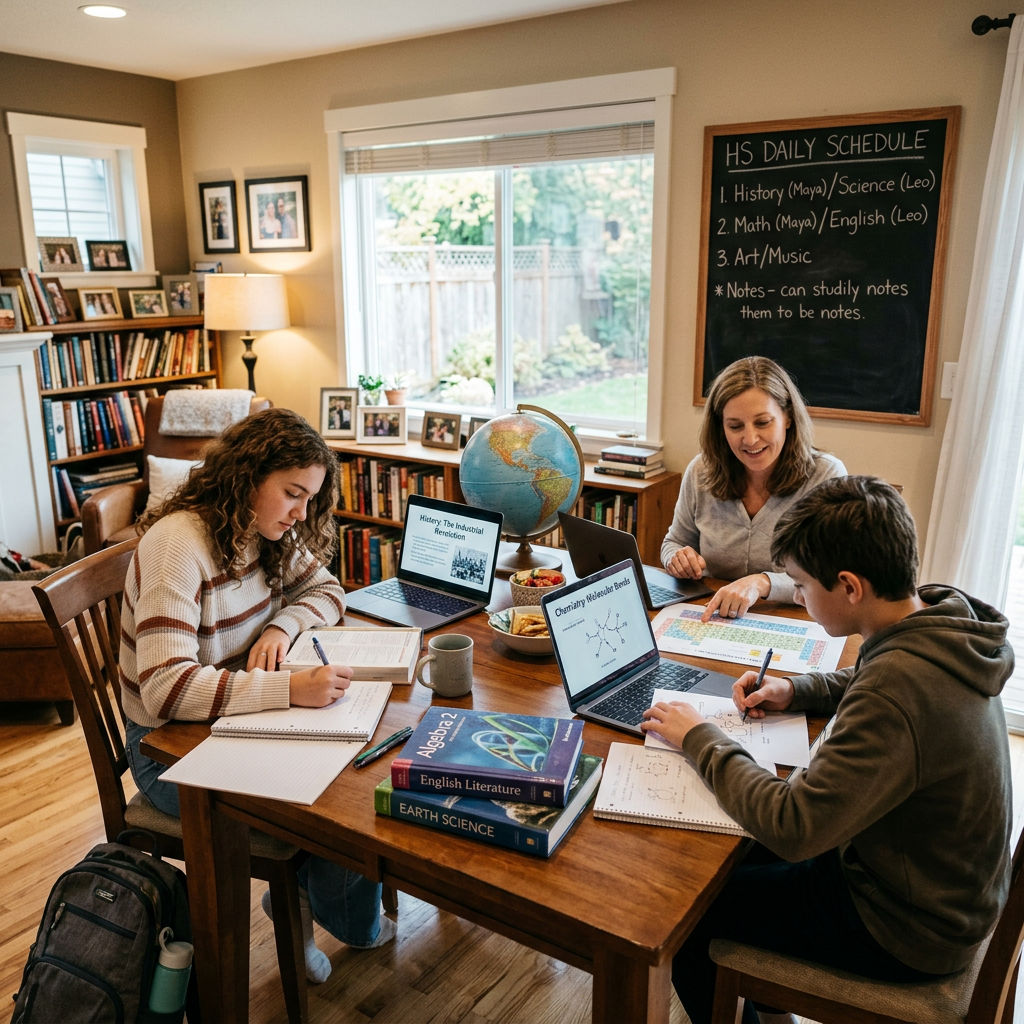
Homeschool high school can open doors—or quietly close them—depending on how well you document learning.
This guide is a parent-friendly starting point for Florida families across:
- the Florida Home Education Program,
- umbrella/private school structures,
- and FLVS blends.
The goal isn’t to recreate a giant school bureaucracy. The goal is to keep things clear enough that colleges, employers, and scholarship programs can understand what your student accomplished.
Step 1: Start with a simple credit plan
Most families do best when they map credits first, then choose curriculum.
Basic categories to plan:
- English (4 credits)
- Math (often 3–4)
- Science (often 3)
- Social studies (often 3)
- Electives (varies)
- PE/Health (varies)
(Exact expectations can differ depending on postsecondary goals—college, military, career—so plan with the end in mind.)
Step 2: Keep “course descriptions” as you go
A course description is just a short summary:
- course name
- primary texts/materials
- major assignments
- grading approach (if you grade)
- approximate hours or pacing
If you write this monthly, it’s painless. If you wait until senior year, it’s misery.
Step 3: Build the transcript (simple is better)
A transcript usually includes:
- student info
- course titles by year
- credits earned
- grades (if used)
- GPA (if used)
- graduation date
Even if your student is At‑Promise and rebuilding confidence, your transcript can reflect that growth clearly and respectfully.
Step 4: Save proof of learning (light portfolio)
Keep a folder with:
- writing samples (with revisions)
- major projects
- lab photos/notes (science)
- reading lists and responses
- any outside classes, certifications, volunteer work, internships
Step 5: Don’t skip writing (it affects everything)
In high school, writing is one of the biggest differentiators for college and career readiness.
A strong, simple approach:
- one structured paragraph weekly
- one longer piece monthly
- revision as a habit
Leave a Reply